
Romanticizing Introvertedness
Things Of The Mind

(And How We Turned a Simple Trait Into a Fairy Tale)
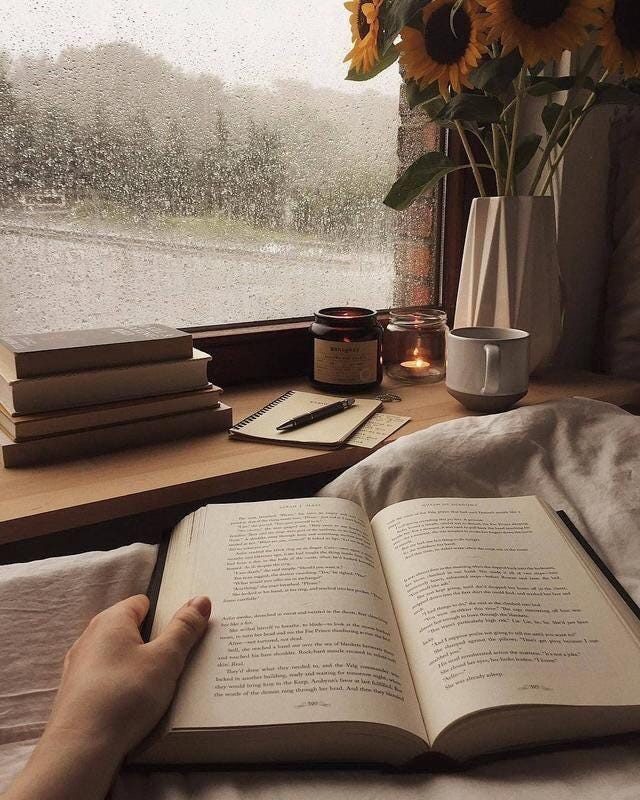
It’s honestly tiring how “introvert” has become an aesthetic. Everywhere you look, people are posting soft-lit photos of books, candles, rain-soaked windows, and coffee, calling it “the introvert lifestyle.” As if the personality type is a Pinterest mood board. Half the people shouting “I’m such an introvert!” don’t even know what the word means. Many aren’t introverts at all—they’re simply tired, wounded, anxious, lonely, or misinformed, but TikTok edits and nostalgic photos convinced them they belong to some mystical, fragile tribe of quiet geniuses.
This new “introvert aesthetic” isn’t harmless.
It’s misleading.
It’s shallow.
And honestly? It’s commercialized nonsense.
How Introversion Lost Its Meaning
When Carl Jung coined the term in the 1920s, introversion wasn’t about shyness or hiding from society. It wasn’t a personality flaw. It wasn’t a poetic identity. It was a simple, clinical description of where your mental energy comes from: internally or externally.
That’s it.
But once the word leaked into a culture obsessed with charisma, confidence, and being a “people person,” introversion was twisted into something negative. Being quiet became a problem to fix. Being thoughtful became “awkward.” Being inward became “strange.” Society made the introvert feel like the defective one.
That was the first distortion.
Then came the second.
The Rebranding: From Flaw to Fairy Tale
Over the last two decades, the pendulum swung too far the other way. With books like Quiet and a wave of personality-based self-help, introversion became a brand—something to advertise, romanticize, and sell.
Suddenly, introverts were portrayed as deeper, wiser, more creative, more authentic, more intelligent, more mysterious. Every meme and article painted introverts as these profound, soulful beings living in cozy corners, sipping tea, writing poetry, and thinking ancient thoughts.
It felt validating… because everyone likes to feel special.
But this version of introversion isn’t real.
It’s a flattering stereotype, still a box, still a misunderstanding—just coated in soft lighting and warm filters.
The original meaning—how you recharge—got buried under a mountain of aesthetic nonsense.
When Mislabeling Becomes a Problem
The modern rebrand encourages people to misdiagnose themselves. Many confuse introversion with overstimulation, burnout, social anxiety, fear of embarrassment, avoidance, trauma, or simply not knowing how to talk to people. But instead of growing, healing, or learning, they cling to the introvert label because it feels safer.
It becomes a shield.
A justification.
A comfort zone.
And once something becomes your identity, you stop questioning it. You stop improving. You stop trying to understand yourself. The aesthetic becomes a prison disguised as personality.
The Cost of This Aesthetic (Especially for Young People)
This is where the real damage shows.
Kids today are growing up believing the mood-board version of introversion is real. They alter their behavior just to match what they see online—avoiding friendships, refusing to be socially responsible, isolating themselves in virtual worlds, hiding behind video games, fandoms, and “I’m just introverted” excuses. They think emotional withdrawal is personality. They think poor social skills are destiny. They think avoiding human connection is self-care.
This false introvert identity has consequences:
It delays emotional maturity.
It prevents kids from forming real friendships.
It distorts self-perception during the most formative years.
It signals “easy target” to bullies who already see introverts as weak.
Bullies thrive on stereotypes, and this one paints introverts as soft, fragile, or helpless—when real introverts are none of those things.
Fiction Is Not Helping Either
Movies, novels, K-dramas, Wattpad stories—they keep recycling the same lazy trope: the introverted girl, the introverted boy, the mysterious loner, the quiet romantic who thinks deeply and loves intensely. Writers glorify it. Fans melt over it. Then they become writers themselves and recreate the same stereotype. A full cycle of delusion.
This shapes how young people view themselves. They believe introversion is tied to romance, intelligence, tragedy, or destiny. They start performing introversion instead of understanding themselves.
But locking yourself in your room with books and headphones is not introversion.
Avoiding people is not introversion.
Running from responsibility is not introversion.
It’s just hiding.
So What Is Real Introversion?
Real introverts are normal people.
They simply recharge differently.
They can relate with others, hold conversations, understand social cues, and operate in society without melting into the floor. They’re not scared of people—they’re simply selective about where they spend their energy.
Real introverts do not depend on fantasy worlds to feel alive.
They don’t need aesthetics to validate their identity.
They don’t crumble in crowds—they just prefer not to stay long.
Introversion is not loneliness.
Not timidity.
Not avoidance.
Not being a hermit.
It is a temperament, not a limitation.
And more importantly, you are not locked into that temperament.
You can grow.
You can change.
You can build social skills, confidence, communication, and presence regardless of where you fall on the introvert–extrovert spectrum.
You are not a boxed personality type—you are a human being with choices.
The One Thing Real Introverts Can Do — and Few Talk About
There is something introverts uniquely excel at—not because it’s aesthetic, but because it’s spiritual.
Real introverts can sit in silence long enough to think deeply.
And in that silence, a few of them meet with God.
Not imagination, not fiction, not fantasy.
But real conversation.
Real reflection.
Real stillness.
An introvert who spends time alone doesn’t have to fill that space with escapism or entertainment. They can fill it with prayer, contemplation, and presence.
And the question every “aesthetic introvert” should ask themselves is this:
Can you sit quietly with God? Or do you only know how to sit quietly with a book?
That’s the difference between real depth and romanticized isolation.